
Rock climbing at the local wall (when you have a fear of heights)
On occasion it has been known to rain. And, when it has rained (really hard) during one of our Overcome Your Fear of Heights courses, we’ve had to resort to heading indoors to a local climbing wall. With this in mind, here are my thoughts and top tips on how best to access a climbing wall safely, successfully and enjoyably, even when you have a fear of heights …

First of all – well done you! The only way we can tackle our fears is by facing them, and that’s what you’ve decided to do. Great stuff. But remember to do this intelligently, slowly and incrementally.
1. Walk around and normalise the place
When you arrive at the local wall, take a stroll around. It’s not a space for ‘other people’ – it’s a space for everyone. Normalise this place: it’s now yours too. You’ll see kids there with teachers, novices, regulars, pensioners, and some bloody good climbers. And you know what – they’re all on the same journey as you: they all know how to give themselves a bloody good scare. You’re in good company. (But also at a deep psychological level, you’re showing your brain there are no threats here).
2. Try not to book with a group
You will want to book onto a session with one of the wall’s instructors. My advice here is not to go for the introduction-to-climbing type course. For all sorts of reasons this probably won’t work for you. Instead, if you can, book a 1 or 2 hour slot with someone on a 1:1 basis. Then tell them you have had (past tense?) a fear of heights, and want to try climbing. Indoor instructors are generally really nice people and they are all really good at being supportive and encouraging. But they might not know where to start with you!
3. Learn the fundamentals … but at ground level
To climb a wall to the top (gulp) you’re going to need some skills. You’ll need some skills because that way you can move with efficiency and flow, and if you move with efficiency and flow, it will feel good, and not scary. And you’ll then want to do it again! It’s also a really good place to start (near to the floor). So ask your instructor to teach you some holds, and also how to rest, whilst on the wall. Have them explain body awareness, balance, and efficient movement techniques like using your legs, straight arms, bridging and edging/flagging. Do this at ground level.
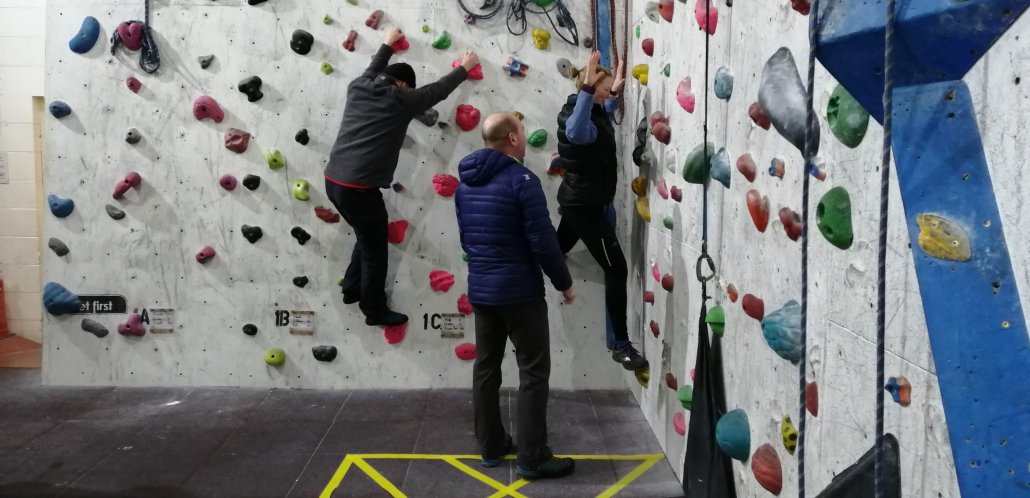
4. Let it all out – ask the questions
All good so far – but alas you’re far from being a pro! (But you’re moving in the right direction). Now’s the time to get tied onto a rope: (eek! Shit’s got real). Because you have a fear of heights a million questions will be running through your mind, like what if I climb half way and then want to come down but there’s super glue holding me to the wall!? Etc etc. Ask all those questions. (My mum always says there’s no such thing as wrong question. So ask them). Expressing your fears and emotions now is appropriate and healthy. (Again this is why working 1:1 with an instructor is a good idea).
Once you have got all this off your chest, they will explain why this is a really really safe thing to do, and explain all the systems and checks we do as climbers. This will also help you to engage the clever, intelligent bit of your brain, which is what you need to be doing if you don’t want to be scared.
5. Rituals help us to keep focused when under stress
So where were we? Oh yes – you are now ready to start climbing, but agree that you will only climb about 6 feet up. At that place, you need to go through this ritual. (Rituals help us to keep focused when under stress).
- Adopt a rest position (you’ve just learned these)
- Chalk up your hands, one at a time (because this requires coordination by the intelligent and rational part of your brain)
- Pause
- Give the instructor a thumbs down (to signal you’re ready to lower off)
- Sit back in your harness, and take both hands off the wall. Just taking one hand off the wall won’t work!
They will then slowly and carefully lower you down. Mentally you can let your brain (that limbic part we/Steve Peters calls the Chimp), know you’ve survived. (You’ve begun a new narrative, one that goes, we can climb and still survive).
Really really good start.
6. Take control and agree your target
Now look at the wall, and agree a place where you will climb to. This might be just 50cm higher than what you have just done, or half way up … or all the way to the hold that looks remarkably like a penis. (Every wall has one). Agree your target, and start climbing.
This way, you feel in control. The instructor knows the score now and can see where this is going. When you get to your target location go through the ritual … (Rituals help us to keep focused when under stress).
- Adopt a rest position (you’ve just learned these)
- Chalk up your hands, one at a time
- Pause
- Give the instructor thumbs down (to signal you’re ready to lower off) or … give your instructor thumbs UP to signify you can climb higher!
When you’re ready to come down, go through your ritual, and you’ll be lowered off.

7. But what if I don’t make it to my target location?
That’s ok. So you get somewhere short of your target, and stop. Then you’ll start thinking. And thinking will get you nowhere. Pack it in, since we all know you’re now thinking with that emotional part of your brain called the Chimp. And you know where that conversation goes!
Ok, easier said than done. This is where a good instructor will help. They need to give your clever rational part of your brain something to think about. It might be a simple task like ‘spell encyclopaedia’ or ‘tell me your phone number … and now backwards’.
Really, really try hard to engage with these tasks. They will really help you gain some calm once more. Then, once calm, go through your coming-down ritual. Adopt a rest position and so on.
8. Practice makes perfect
Keep at this. Take time to have a break if need be. Get a drink, have a snack, go for a pee. Stick with this and slowly you’ll make progress. And just maybe, you’ll make it to the top! If you do, try and do it again, slowly and carefully. Repetition makes a huge difference.
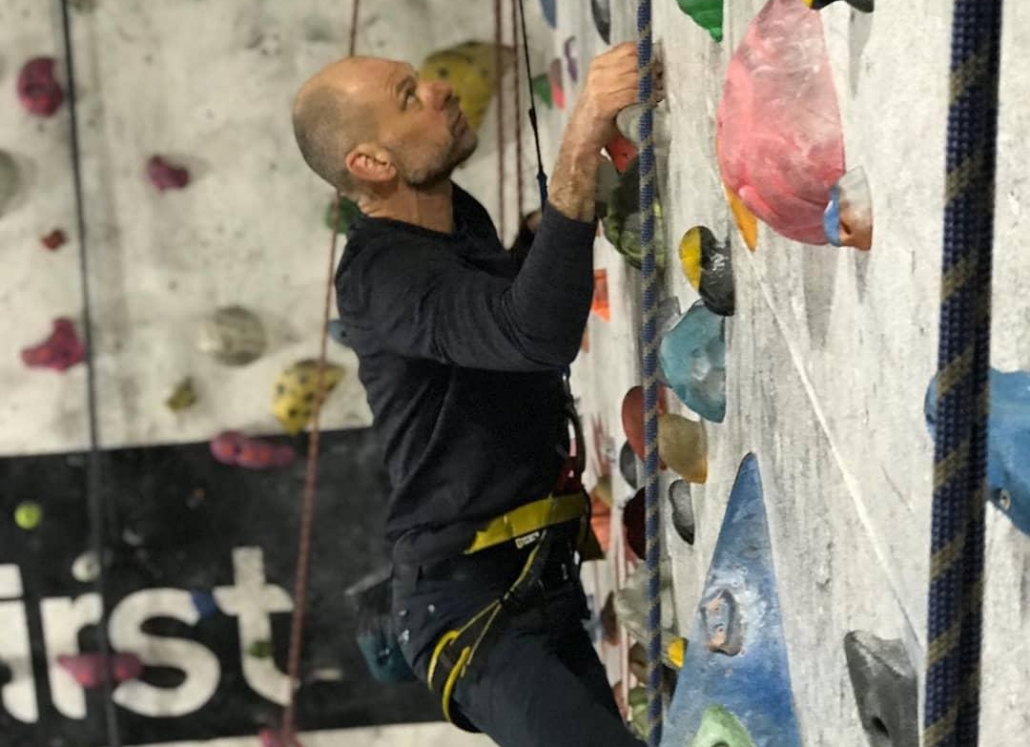
If you have any credit left in the bank, head over to an autobelay and see how they work. Again, do this intelligently, slowly and incrementally … learn how they work. Try it from six feet up and so on. And remember, wherever you get, stick to your ritual!
9. What’s next?
If this session went well, now is the time to book onto that beginners’ course. This will team you up with other complete novices. Some of them will be looking for a new hobby or sport, and some of them may have tried rock climbing before, and now they’re learning how to properly. Or maybe some of them will be there to deal with a fear of heights through rock climbing! (See if you can help them!)
If you’re really enjoying the climbing and want to push yourself further, the next step would be to come and join us for a day of rock climbing outdoors, and then come and join us in the mountains for some scrambling. Always we take it slowly, building up your skills gradually and incrementally helping you to grow your confidence at heights.
Further Reading
Everything there is to know about acrophobia and a fear of heights
Acrophobia & how we help people with a fear of heights
Understanding your fear of heights
7 Top Tips on how to beat your fear of heights
BBC – Tips for overcoming fear from the world’s best free solo climber
UKC.com – Playing with fear
UKC.com – How to conquer the fear of falling
Follow up sessions – How to reinforce getting over fear of heights
More Fear of Heights articles


